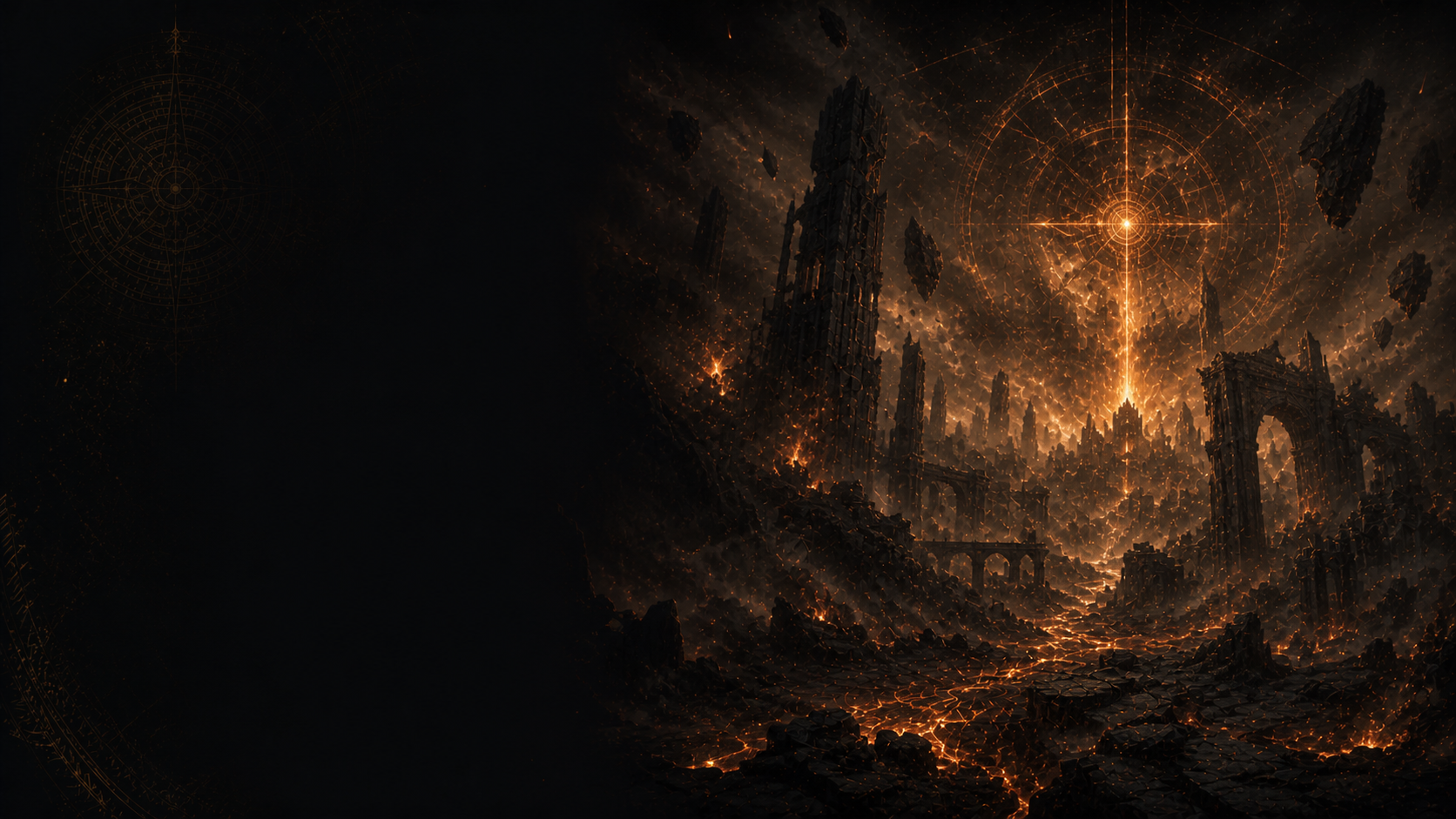
The Age of Strife
The Age of Strife marks the turbulent middle centuries of the Third Age, a period defined by political fragmentation, rebellion, and the collapse of long-standing imperial stability. For generations, the great powers of Arkanthys had existed within a delicate balance shaped by the legacy of the Ostagarian Empire and the influence of the Pantheon. But as empires expanded and authority weakened, that balance began to fracture.
The Valiran Empire rose to unprecedented power before splintering apart. Colonial provinces revolted against distant rulers. Ancient kingdoms fortified themselves against invasion. Magic itself became a controlled and contested force as Ostagar attempted to tighten its grip over the world. Across continents, alliances failed, borders shifted, and old loyalties crumbled. By the end of the Age of Strife, the world had divided into competing powers whose conflicts would ultimately lead to the greatest catastrophe in mortal history - The Godwar.
The Death of Emperor Calan Velaine
The stability of the Valiran Empire collapsed following the death of Emperor Calan Velaine, the final ruler capable of holding the empire together. Although the imperial dynasty had been founded generations earlier by Urus Velaine I, the unity of Valira depended heavily on strong central leadership. When Calan Velaine died without a successor capable of commanding the loyalty of both great elven realms, the empire quickly fractured. The ancient cultural divide between Myrien and Cadrien resurfaced. Myrien, whose identity was tied to the sacred forests surrounding the World Tree Myriandor, reasserted its independence. Cadrien, shaped by the arcane traditions surrounding Syrandora, the eastern World Tree, formed its own ruling structure.
The once-unified Valiran Empire ceased to exist.
In its place stood two rival elven states.
The Arannan Rebellion
In the deserts of Aranna, resentment toward imperial rule had been growing for generations.
During the height of Valiran power, the region had been conquered and placed under imperial administration. The valuable Tar fields of the desert were heavily exploited to fuel imperial industries and warfare, while the desert lords who controlled the land were gradually stripped of authority. Eventually the surviving Tar barons united in rebellion. What began as scattered uprisings rapidly evolved into a coordinated revolt against Myrien’s rule. The rebellion drew support from desert clans, merchants, and former baronial armies determined to reclaim control of their lands.
The war between Myrien and the rebels of Aranna became one of the defining conflicts of the Age of Strife.
The Burning of Myriandor
At the height of the rebellion, Arannan forces struck a devastating symbolic blow against their former rulers. In an act remembered both as sacrilege and liberation, the rebels destroyed Myriandor, the ancient World Tree of Myrien.
The burning of the sacred tree shook the world.
To the elves of Myrien it was an unforgivable attack against the foundation of their civilization. To the rebels of Aranna it symbolized the destruction of imperial dominance and divine justification for their subjugation. With the fall of Myriandor, the rebellion transformed into a permanent break between the desert lands and the elven kingdoms.
From this conflict emerged United Aranna, a new power born from rebellion and fire.
The Arcana Memorandum
As instability spread across Arkanthys, the authorities of Ostagar sought to reassert control. The result was the Arcana Memorandum, a sweeping decree intended to regulate the use of magic throughout the empire. The memorandum declared that all magical relics belonged to the imperial state. Independent mage guilds were dissolved, and arcane research was placed under strict oversight by imperial authorities.
Artifacts were confiscated. Scholars were imprisoned. Magical practice moved underground. Although the decree strengthened imperial control in the short term, it also fueled resentment and rebellion among those who saw it as a direct assault on intellectual and arcane freedom. Secret circles of sorcerers and relic hunters soon began to appear throughout the world.
A World on the Edge
By the closing centuries of the Age of Strife, the political landscape of Arkanthys had fundamentally changed.
The once dominant powers of earlier ages had fractured into rival states and competing ideologies:
- The Ostagarian Empire, attempting to maintain control through law and arcane regulation.
- The Kingdom of Myrien, wounded by the loss of Myriandor.
- The Realm of Cadrien, increasingly independent and devoted to Syrandora.
- United Aranna, forged from rebellion in the southern deserts.
No single power held clear dominance over the world.
Tensions continued to grow between empires, religions, and cultures.
Within a few generations, these conflicts would ignite the catastrophic war that ended the Third Age.

Comments